The Pompadour: A Haircut That Refuses to Die
From 18th-century French aristocracy to modern barbershops, the pompadour is one of the few haircuts that has survived centuries without losing its identity.
Sarah Mitchell
Content strategist with a passion for helping businesses grow.

The Pompadour: A Haircut That Refuses to Die
Some haircuts come and go.
Others evolve, adapt, and quietly survive decades of cultural change.
The pompadour belongs to the second category.
From European aristocracy to rock ’n’ roll rebels, from classic barbershops to modern fades, the pompadour is one of the few styles that has crossed centuries without losing its identity.
This is not just a haircut.
It’s a statement.
What Is a Pompadour?
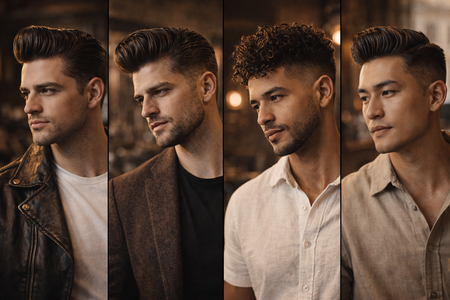
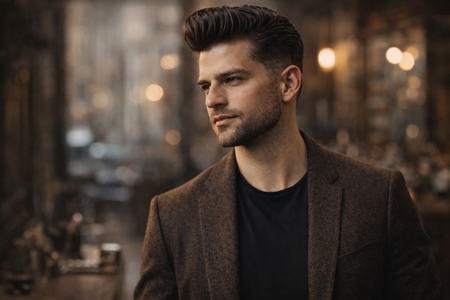
The pompadour is defined by volume at the front of the head, swept upward and back, with shorter sides and a more controlled shape around the crown.
The key elements:
- Height and structure at the front
- Clean, tapered or faded sides
- Strong silhouette from profile view
- A balance between elegance and masculinity
It can be worn:
- Classic and slick
- Textured and messy
- Faded and modern
- Long and dramatic
- Short and subtle
It adapts to face shape, hair texture, and personal style without losing its recognizable form.
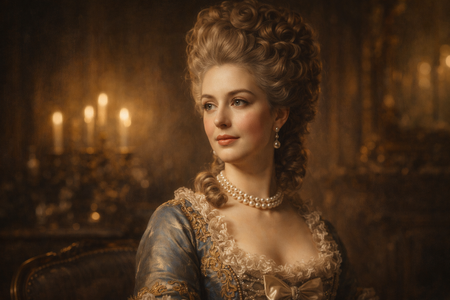
The Origin: 18th-Century France
The name comes from Madame de Pompadour, mistress to King Louis XV of France.
In the 1700s, she popularized a hairstyle that lifted hair high above the forehead, creating volume and drama.
At the time, it was a symbol of status, sophistication, and influence.
The pompadour was originally feminine.
It only later became associated with men.
The 1950s: Elvis and the Birth of a Legend
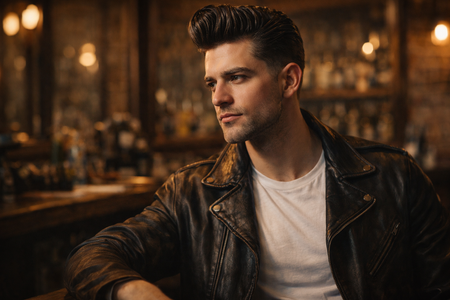
The pompadour’s modern identity was forged in the 1950s.
Elvis Presley.
James Dean.
Little Richard.
These figures transformed the style into a symbol of rebellion, youth culture, and rock ’n’ roll masculinity.
High shine.
Strong volume.
Bold confidence.
From that moment on, the pompadour became permanently embedded in men’s grooming culture.
The Modern Pompadour
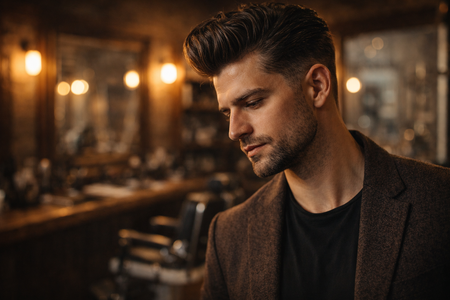
Today’s pompadour is more versatile and refined.
Barbers now combine:
- Skin fades
- Low or mid tapers
- Natural texture
- Matte finishes
- Precision scissor work
The result: a haircut that works in both creative and corporate environments.
It can look:
- Clean and professional
- Bold and edgy
- Casual and effortless
All with the same underlying structure.
Why Barbers Love the Pompadour
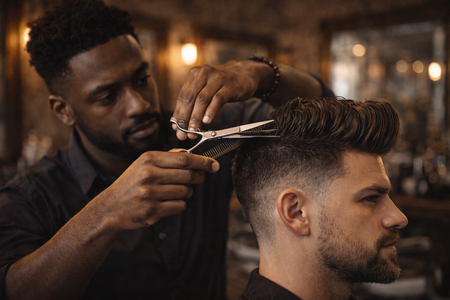
The pompadour is a barber’s haircut.
It showcases:
- Blending skill
- Structural control
- Scissor technique
- Product knowledge
- Client consultation ability
It’s also one of the best styles for building long-term client relationships because:
- It requires regular maintenance
- It evolves over time
- Clients get emotionally attached to it
When someone commits to a pompadour, they usually don’t switch styles easily.
Who Should Wear a Pompadour?
It works best for:
- Oval, square, and heart face shapes
- Medium to thick hair density
- Straight to slightly wavy hair
But with the right adjustments, it can be adapted to:
- Curly hair
- Fine hair
- Receding hairlines
- Mature clients
A good barber doesn’t copy a pompadour.
They design one.
The Business Side: Why This Cut Still Sells
From a barbershop business perspective, the pompadour is gold.
It:
- Creates repeat visits
- Supports premium pricing
- Builds personal brand identity for clients
- Encourages product sales
- Drives word-of-mouth referrals
Clients wearing a pompadour often become walking advertisements for the shop.
How to Ask Your Barber for a Pompadour
Don’t just say “I want a pompadour.”
Instead:
- Bring reference images
- Explain how much height you want
- Mention your daily styling routine
- Discuss fade or taper preferences
- Talk about work environment and lifestyle
The better the conversation, the better the cut.
Final Thought
The pompadour has survived revolutions, cultural shifts, fashion cycles, and changing definitions of masculinity.
That doesn’t happen by accident.
It happens because great style isn’t trend-driven.
It’s structure-driven.
And the pompadour has one of the strongest structures in the history of men’s grooming.
Enjoyed this article? Share it with others.
Related Articles

Adding Skincare Services to Your Barbershop: A Practical Guide
Men's skincare is booming. Here's how to add facials, treatments, and skincare consultations without a complete shop overhaul.

Mobile Barbering: Taking Your Chair to the Client
Home visits, corporate events, on-location cuts. Here's how to build a mobile barbering business that works.

The Berlin Barbershop Scene: A Neighborhood Guide for Owners
Berlin's barbershop culture is as diverse as its neighborhoods. Here's what makes each area unique—and where the real opportunities are.